Wings Across North-Eastern South Africa
A 17-Day Birding Adventure

🗺️
🚐
Expert birding guides
Scenic routes & viewpoints
Small groups or private tours
Trip highlights:
✔ Stunning views of the Drakensberg
✔ Two endemic families
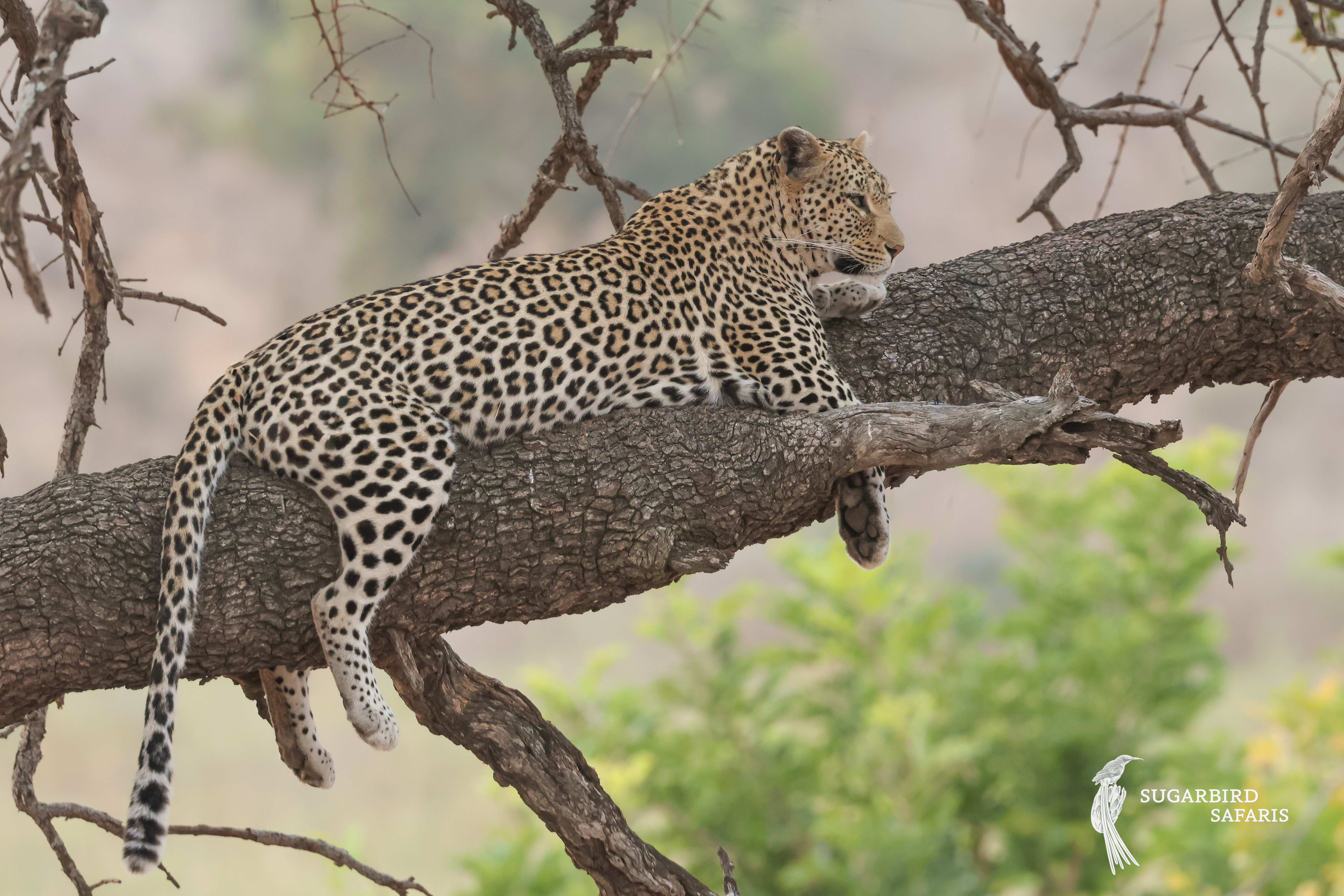
✔ Chance of seeing Big 5
✔ Chance of seeing Big 6 (birds)
✔ Visiting world famous Kruger
✔ Chance of seeing 450+ birds
Day to day program:
Day 1: Johannesburg - Zaagkuilsdrift
Day 2: Zaagkuilsdrift
Day 3: Zaagkuilsdrift - Magoebaskloof
Day 4: Magoebaskloof - Swadini
Day 5: Swadini - Kruger
Day 6: Kruger
Day 7: Kruger - Wakkerstroom
Day 8: Wakkerstroom
Day 9: Wakkerstroom - Mkhuze
Day 10: Mkhuze
Day 11: Mkhuze - St. Lucia
Day 12: St. Lucia
Day 13: St. Lucia - Eshowe
Day 14: Eshowe
Day 15: Eshowe - Underberg
Day 16: Sani Pass
Day 17: Underberg - Johannesburg
An Unforgettable Nature & Birding Safari through South Africa
This journey is the perfect blend for true nature enthusiasts. Over the course of 17 days, we’ll explore the vast and varied landscapes of South Africa in search of birds, mammals, and reptiles, experiencing some of the country's richest biodiversity hotspots. South Africa is world-renowned for its outstanding safari opportunities, with the legendary Kruger National Park standing tall as one of the largest and most iconic game reserves in southern Africa.
Our route traverses a stunning variety of ecosystems, each with its own character and species. We begin in the semi-arid bushveld of Zaagkuilsdrift, where the dry thornveld teems with birdlife. From there, we ascend into the misty montane forests of Magoebaskloof, home to a wealth of forest specialists. The journey continues into the lowveld savannas of Kruger, where classic safari experiences await, complete with the Big Five, cheetahs, and an impressive diversity of birdlife.
Heading south, we reach the highland grasslands around Wakkerstroom, a renowned hotspot for rare and range-restricted bird species. We then descend into the lush coastal forests and wetlands of KwaZulu-Natal, an area rich in tropical biodiversity and unique endemics. Finally, the trip culminates, literally and figuratively, at high altitude: via the breathtaking Sani Pass, we’ll climb into the rugged Drakensberg Mountains, with a brief excursion into the mountain kingdom of Lesotho.
Throughout the trip, we aim to observe a wide variety of species from South Africa’s impressive checklist of over 850 bird species. But it’s not just about the birds: larger game, rare reptiles, and unforgettable landscapes will all feature prominently.
Chance of seeing the big 6:
-
Kori Bustard
-
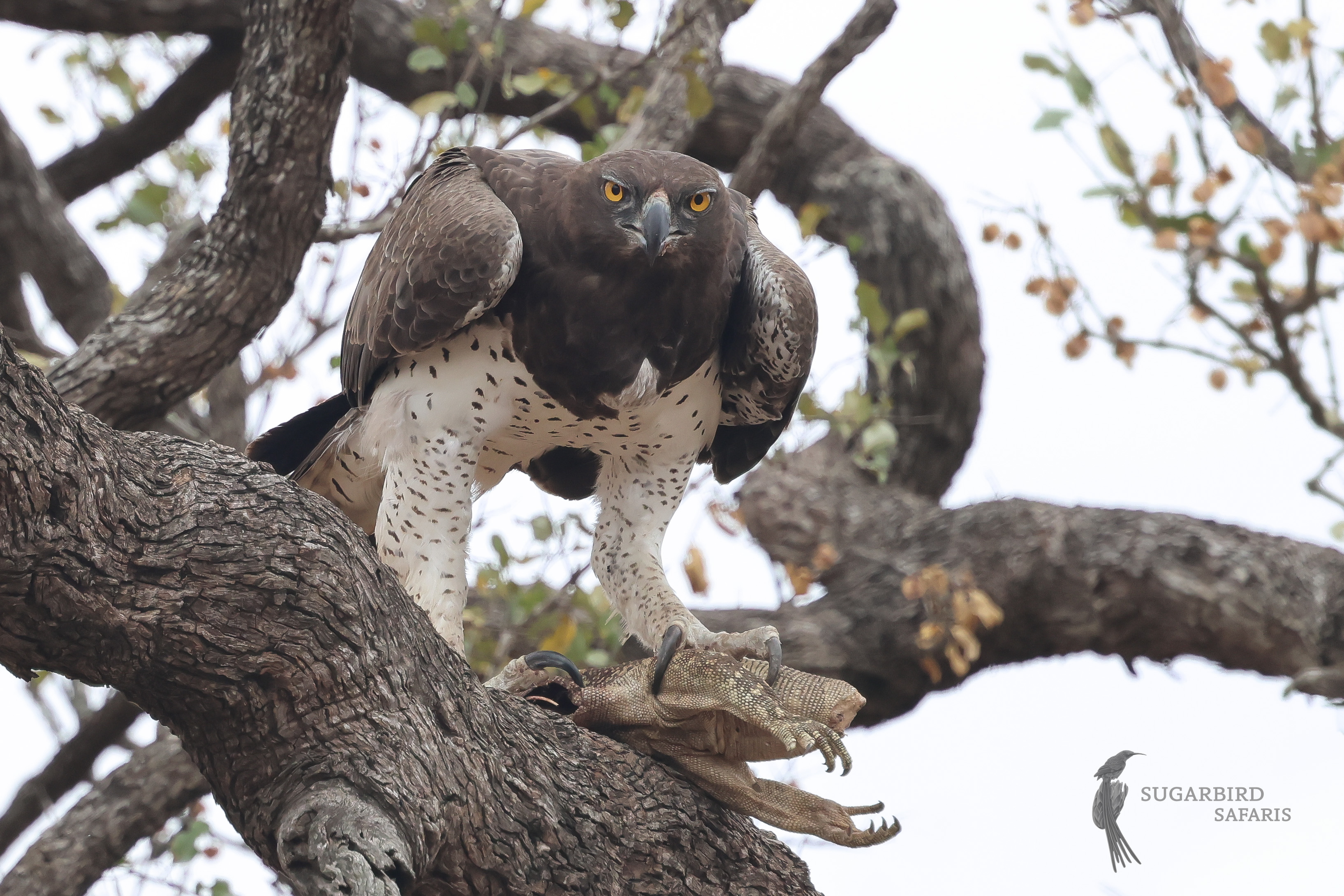
Martial Eagle
-
Lappet-faced Vulture
-
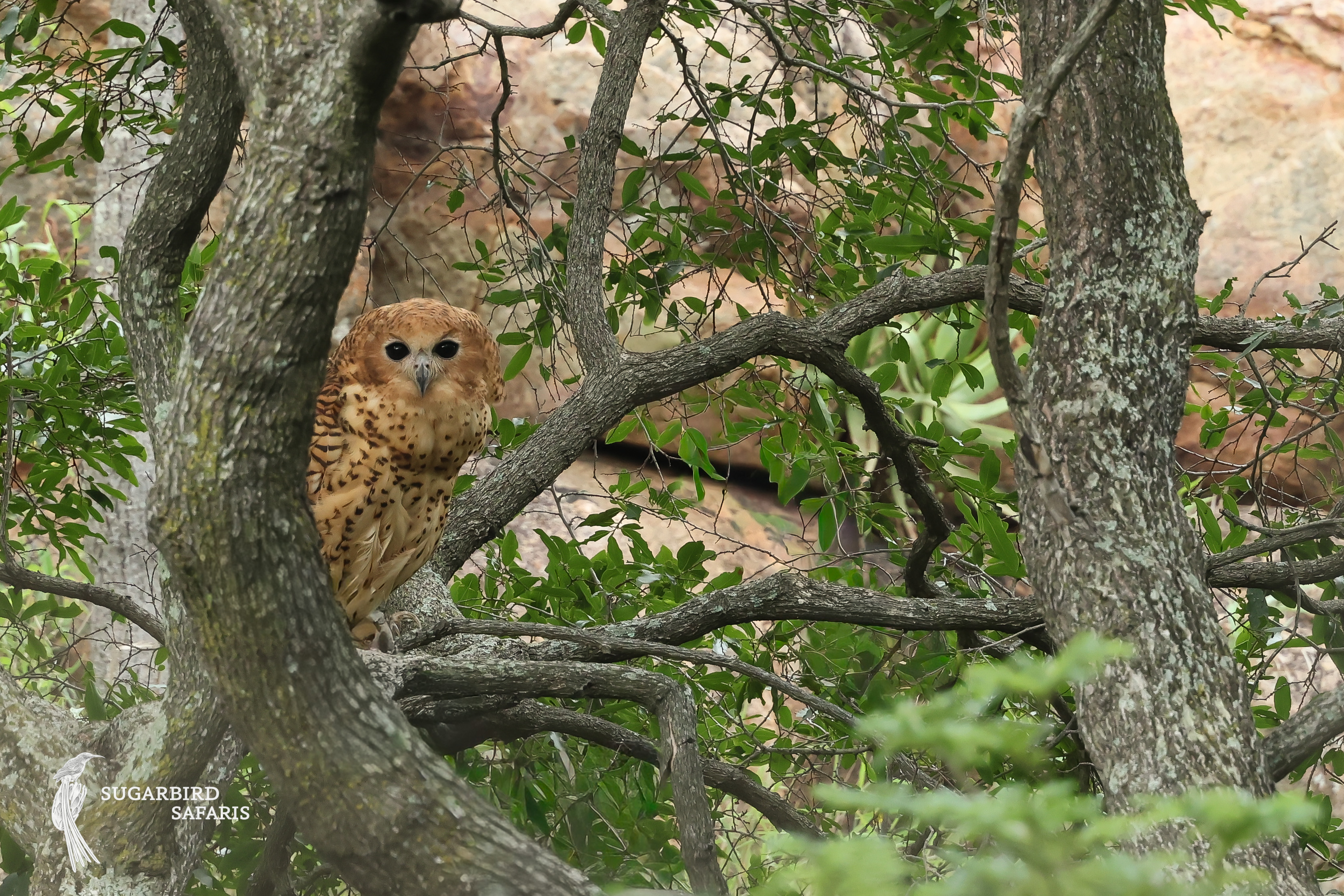
Pel’s Fishing Owl
-
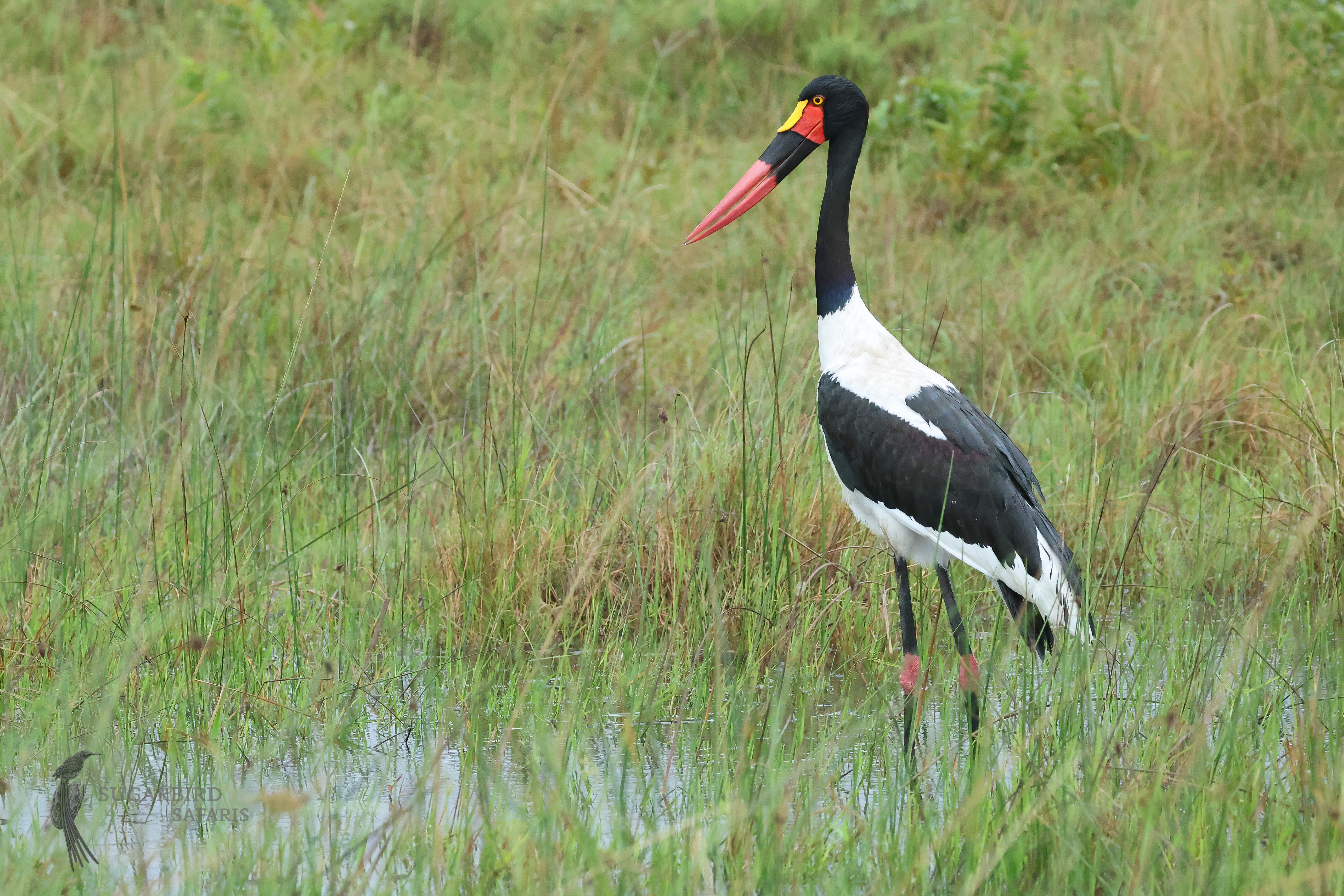
Saddle-billed Stork
-
Southern Ground Hornbill
Day 1 – From Johannesburg → Zaagkuilsdrift
If we’re able to set off in the morning, we’ll stop at Rietvlei Nature Reserve, a small but rewarding protected area situated between Johannesburg and Pretoria. This is an excellent place to look for species that we’re unlikely to encounter later in the trip, such as Northern Black Korhaan and Orange River Francolin. Other possibilities here include Black-chested Snake Eagle, Orange-breasted Waxbill, and in the summer months, the elusive Cuckoofinch.
From here, we head straight to our first main birding destination: the legendary Zaagkuilsdrift Road. This 20-kilometer stretch of gravel road winds through prime acacia bushveld, offering some of the best birding for dryland species in South Africa. Since many of these species reach their easternmost range limit here, we’ll be treated to a mix of typical bushveld and Karoo birds.
Around our lodge and along the road, we’ll be on the lookout for stunning species like Crimson-breasted Shrike, Southern Pied Babbler, Pale Chanting Goshawk, Scaly-feathered Finch, Great Sparrow, and both Violet-eared and Black-faced Waxbills.
At the far end of the road lies the Kgomo Kgomo Plain, a broad seasonal floodplain that can fill with water in the wet season. This creates rich habitat for herons, storks, ducks, and specialties like Black Heron, Meyer’s Parrot, Blue-cheeked Bee-eater, and (in summer) Black-winged Pratincole.
Day 2 – Zaagkuilsdrift
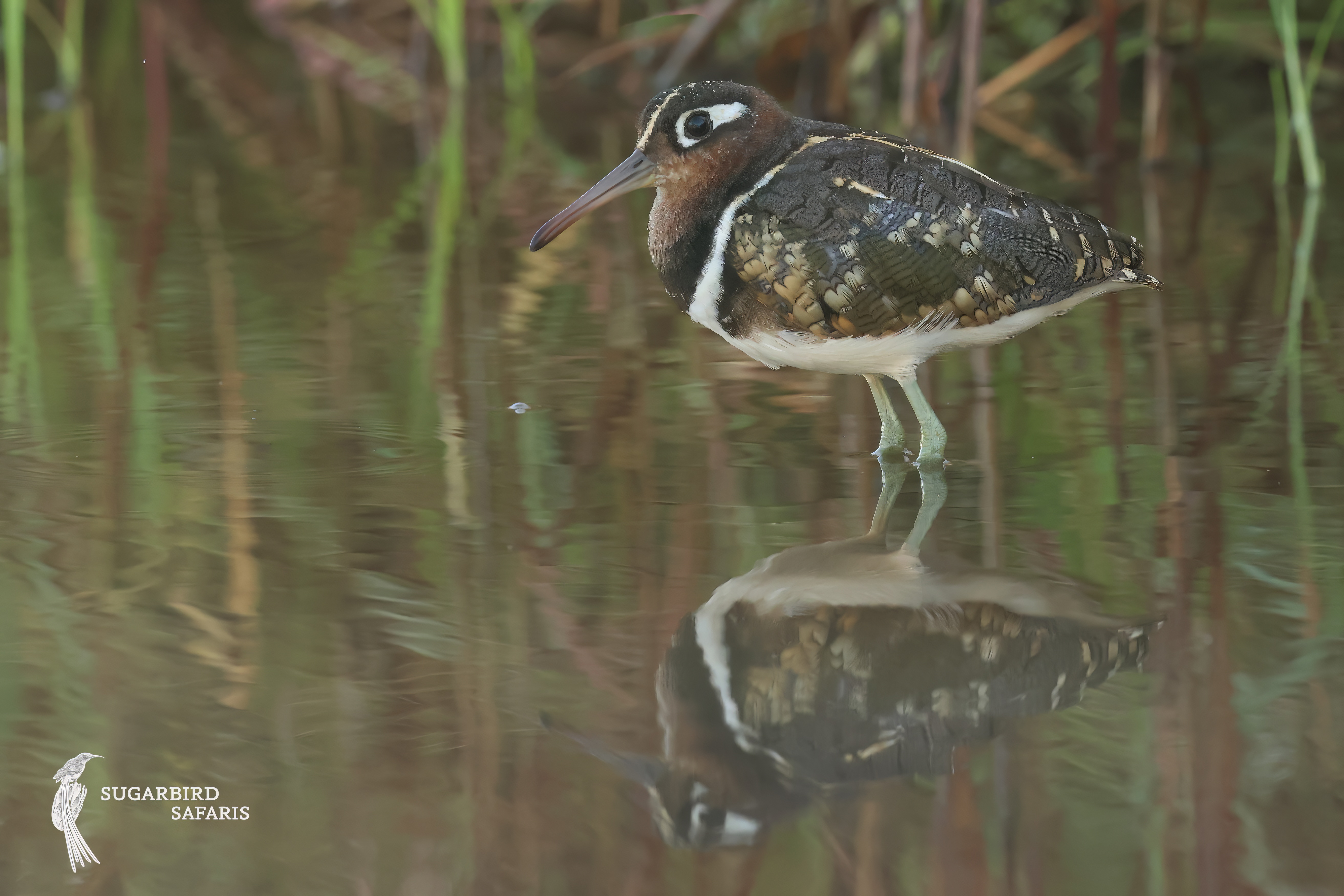
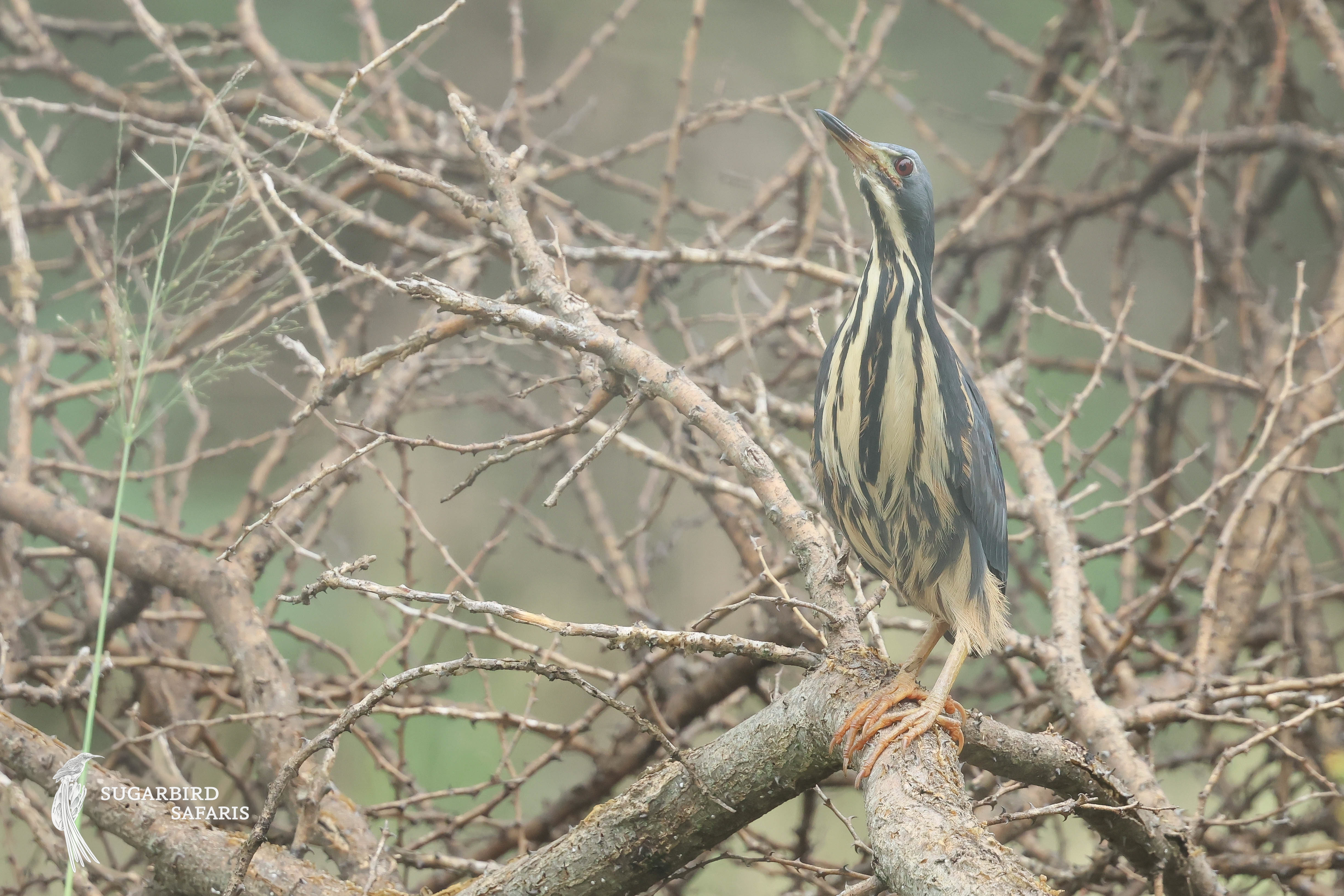
The day begins early along the famous Crake Road, one of the region's finest birding locations for wetland species. Following good rains, shallow pools often remain on the road, attracting an impressive variety of birds, including Greater Painted-Snipe, African Crake, Dwarf Bittern, and, with a bit of luck, even the highly sought-after Striped Crake.
From here, we continue to the expansive Kgomo Kgomo floodplains, where we spend the remainder of the morning exploring this productive birding area. After breakfast, there is time to relax at the lodge or enjoy a leisurely walk around the grounds.
As the afternoon temperatures begin to cool, we head out once more in search of species such as Pearl-spotted Owlet, Barred Wren-Warbler, Black-faced Waxbill, and Violet-eared Waxbill, while keeping an eye out for many other exciting birds along the way.
As dusk approaches, we make one final excursion. This is the perfect time to search for the elegant Marsh Owl and the distinctive Southern White-faced Owl, bringing another rewarding day of birding to a memorable close.
Day 3 – Zaagkuilsdrift → Magoebaskloof
We begin the day exploring the trails and bird hides around our lodge. The peaceful bushveld setting gives us a great chance to enjoy morning birding and possibly catch up on any species we missed yesterday.
After breakfast, we’ll head back along Crake Road and revisit the Kgomo Kgomo Plain if needed. Then we retrace our route along Zaagkuilsdrift Road, continuing our birding en route before joining the main road northward.
Midday brings a birding stop at the Polokwane Bird Sanctuary, a small but diverse reserve that offers a good chance for summer migrants like Olive-tree Warbler, Icterine Warbler, and Great Reed Warbler. Polokwane is also known for hosting all three of South Africa’s indigobird species, and the wetlands often attract waders and rails.
In the late afternoon, we arrive in the charming village of Haenertsburg, nestled on the edge of the Magoebaskloof forests
Day 4 – From Magoebaskloof → Blyde River Canyon
We begin the day early as we meet up with a local birding expert for a full day of exploration in Woodbush Forest, one of South Africa's premier forest birding destinations.
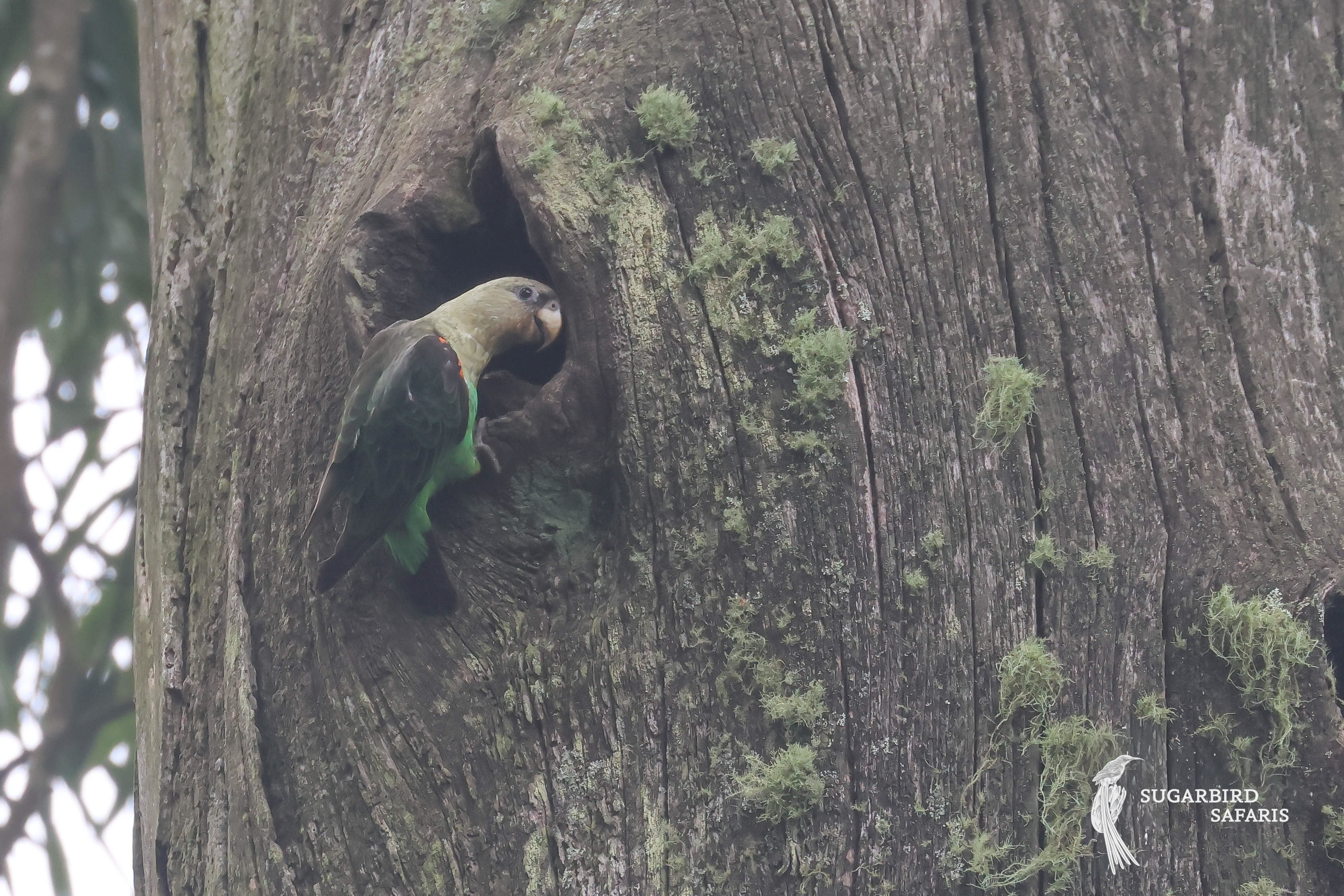
Our morning starts along the forest edge, where grasslands and thickets offer species such as Drakensberg Prinia, Southern Yellow Bishop, and Cape Grassbird. As we venture deeper into the cool, misty forest, we'll search for some of the area's most sought-after specialties, including Green Twinspot, Swee Waxbill, Red-backed Mannikin, Knysna Turaco, Black-fronted Bushshrike, and the elusive Orange Ground Thrush. One of the day's main highlights is the chance to encounter the endangered Cape Parrot, while Crowned Eagle is regularly seen soaring above the forest canopy.
After a rewarding morning, we descend towards Tzaneen, making several birding stops along the way in search of species such as Magpie Mannikin, Blue-spotted Wood Dove, and Bat Hawk.
By late afternoon, we arrive at our lodge overlooking the spectacular Blyde River Canyon, the third-largest canyon in the world and the largest vegetated canyon on Earth. As the sun sets over this breathtaking landscape, we can relax and prepare for another exciting day of birding.
Day 5 – Blyde River Canyon → Kruger National Park
We rise early to begin our search for one of the targets of the trip: the elusive Pel’s Fishing Owl. Success is never guaranteed, but in this region, the odds are as good as they get.
After our owl search, we’ll follow a shaded trail along the river, where forested ravines and clear pools provide excellent habitat for species like Half-collared Kingfisher, Mountain Wagtail, Striped Pipit, and African Paradise Flycatcher. The haunting call of the Narina Trogon might echo from the dense canopy, while Lemon Doves scurry quietly across the forest floor. Overhead, Crowned Eagles may once again make an appearance, soaring high on the thermals.
After spending the morning exploring the canyon, it is time to make our way to the world-renowned Kruger National Park, where we will spend the next two nights. With more than 500 recorded bird species, Kruger is one of Africa's premier birding destinations and offers endless opportunities to add exciting new species to our list.
Of course, our attention won't be focused solely on birds. The park is also famous for its incredible wildlife, giving us an excellent chance of encountering the Big Five, while iconic African mammals such as giraffe, plains zebra, wildebeest, and numerous antelope species are regular sightings throughout the park. Every drive promises new surprises, making Kruger one of the highlights of our journey.
Day 6 – Kruger National Park
We start the morning with a peaceful walk around camp, taking advantage of the quieter hours. Camps in Kruger are often excellent birding spots in their own right. Within the fenced area, we’ll find birds surprisingly relaxed around people, offering great views of woodpeckers, hornbills, kingfishers, starlings, pigeons, and other bushveld regulars.
Later in the morning, once the traffic thins out, we’ll head deeper into the park. One highlight today is a visit to Lake Panic, one of Kruger’s best-known hides. Overlooking a serene waterhole fringed with reeds and overhanging trees, the hide is bustling with life during the summer months. Expect close-up views of Malachite Kingfisher, African Jacana, herons, weavers, Water Thick-knee, and perhaps an African Fish Eagle gliding overhead.
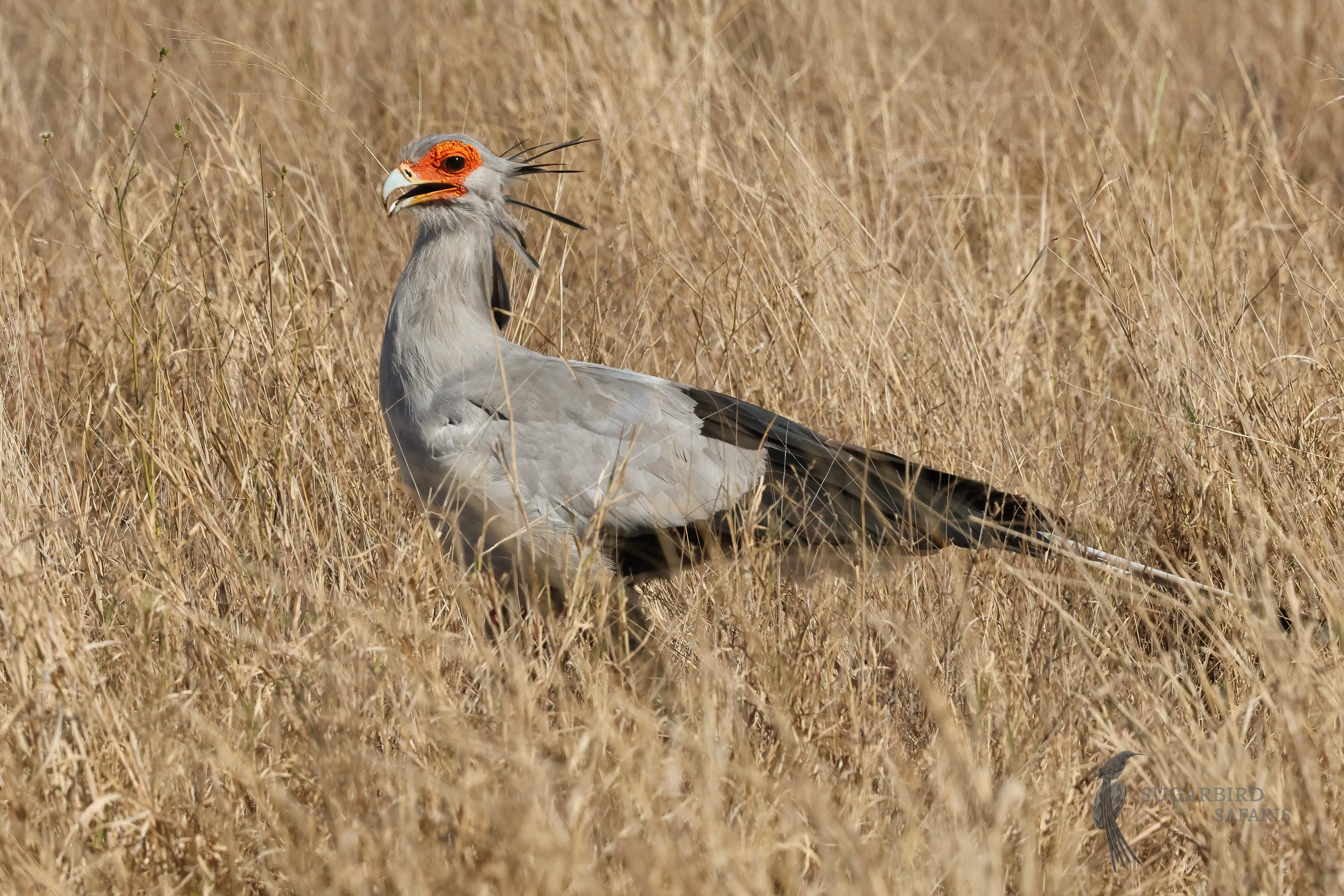
The rest of the day will be a rolling safari through Kruger’s vast landscapes. We’ll search for striking species such as Secretarybird, Common Ostrich, Bateleur, and Verreaux’s Eagle-Owl. Other possibilities include Brown-headed Parrot, Purple Roller, African Green Pigeon, and both White-headed and Lappet-faced Vultures.
For those keen on nocturnal creatures, there’s an optional night drive, a thrilling experience under the African stars. These guided drives offer a chance to see secretive animals such as genets, bush babies, nightjars, and possibly a leopard on the prowl.
Day 7 – Kruger National Park → Wakkerstroom
We begin the day with a final early-morning birding drive inside Kruger National Park, savoring a last few hours with its iconic wildlife and rich avifauna. Around late morning, we’ll exit the park, leaving the lowveld behind as we make our way toward the high-altitude grasslands of Wakkerstroom, perched at over 2,000 meters above sea level.
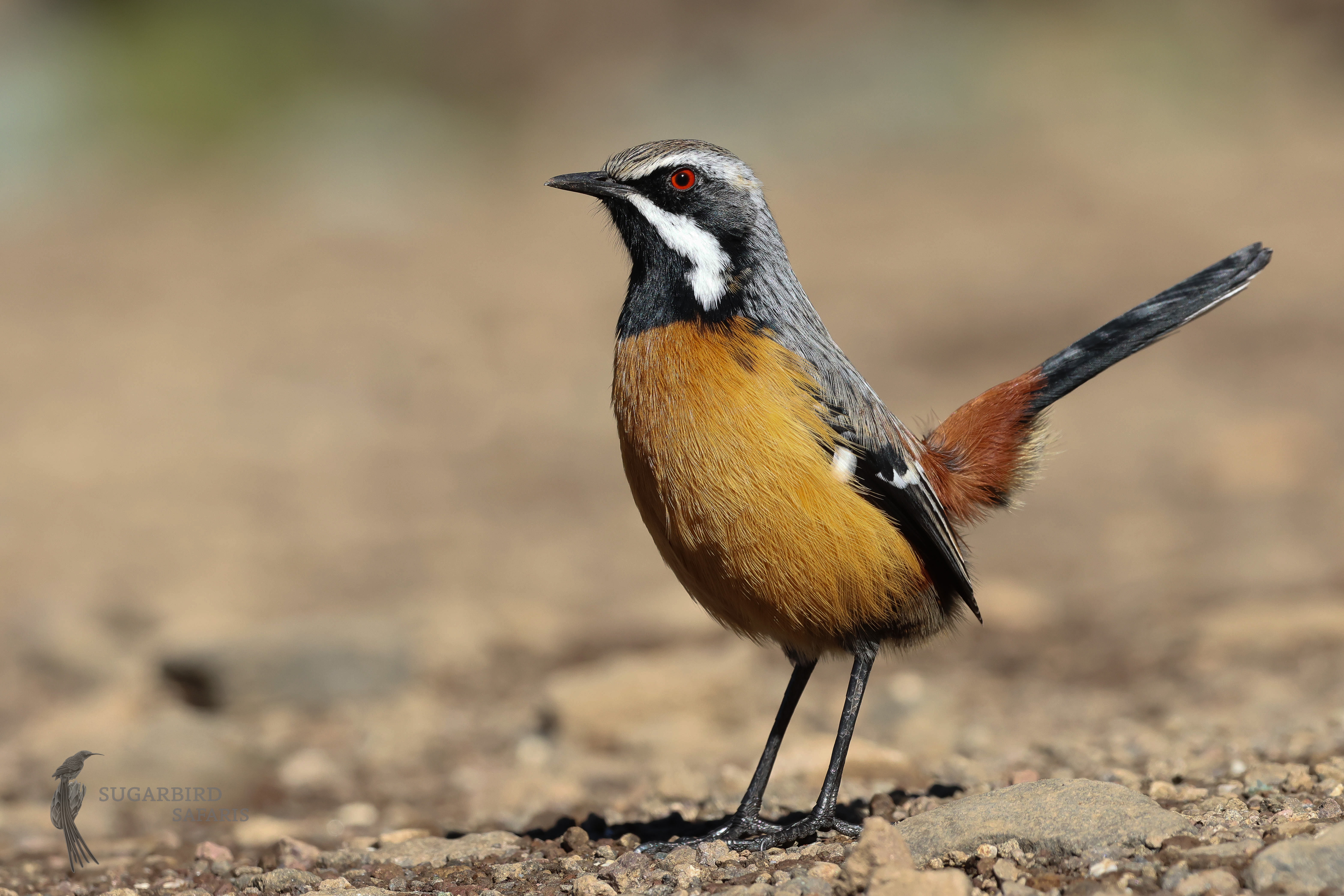
The scenery gradually transforms as we ascend, eventually giving way to sweeping highland grasslands, a completely different biome with its own suite of exciting species. The last stretch of the drive takes us along a 50-kilometer gravel road winding through this expansive upland habitat. Here, we’ll keep our eyes peeled for Ant-eating Chat, Wing-snapping Cisticola, Blue Korhaan, African Quailfinch, Grey Crowned Crane, Denham’s Bustard, and both Pallid and Montagu’s Harriers quartering low over the fields. Meerkats and Yellow Mongooses are often spotted here too, sunning themselves near their burrows.
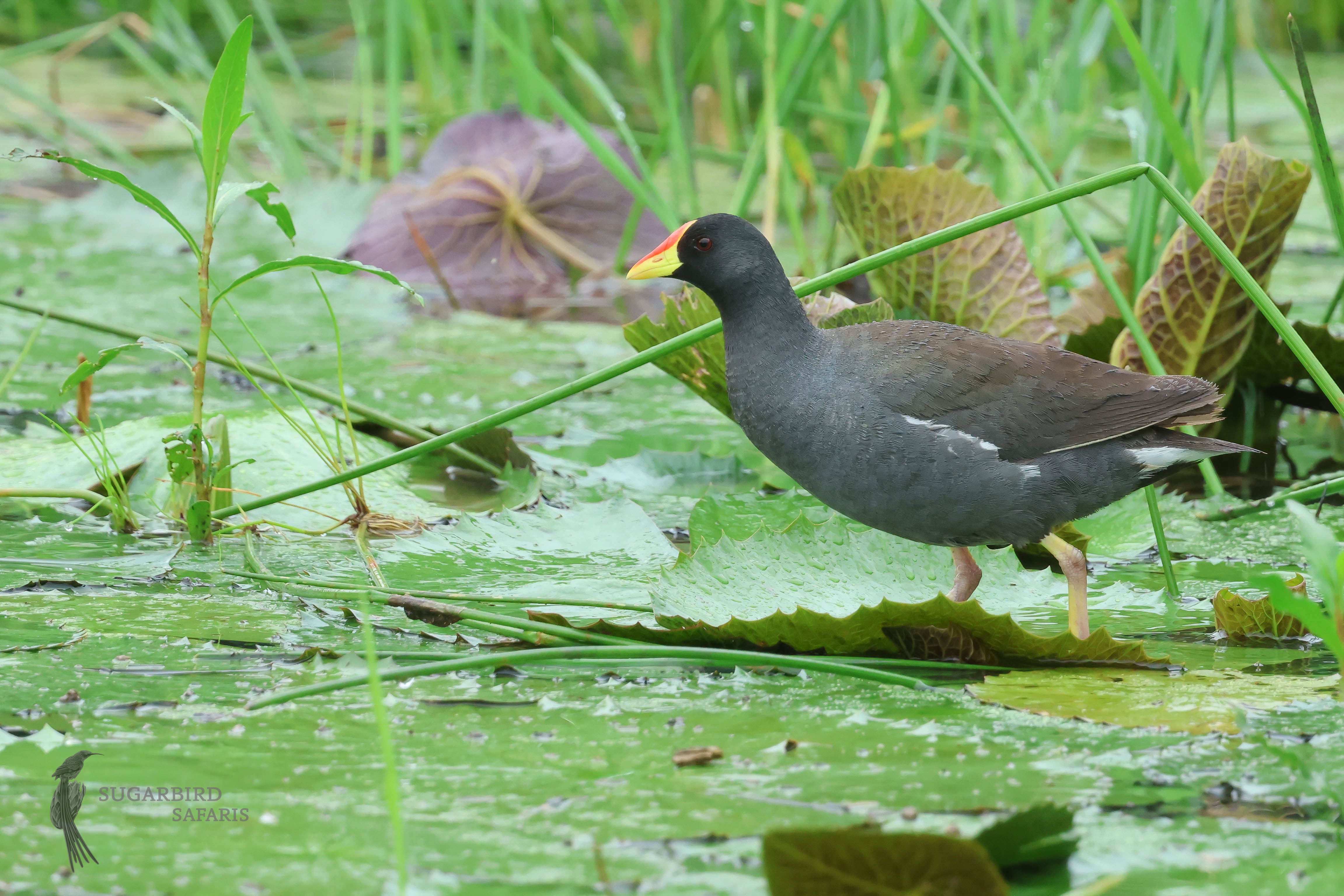
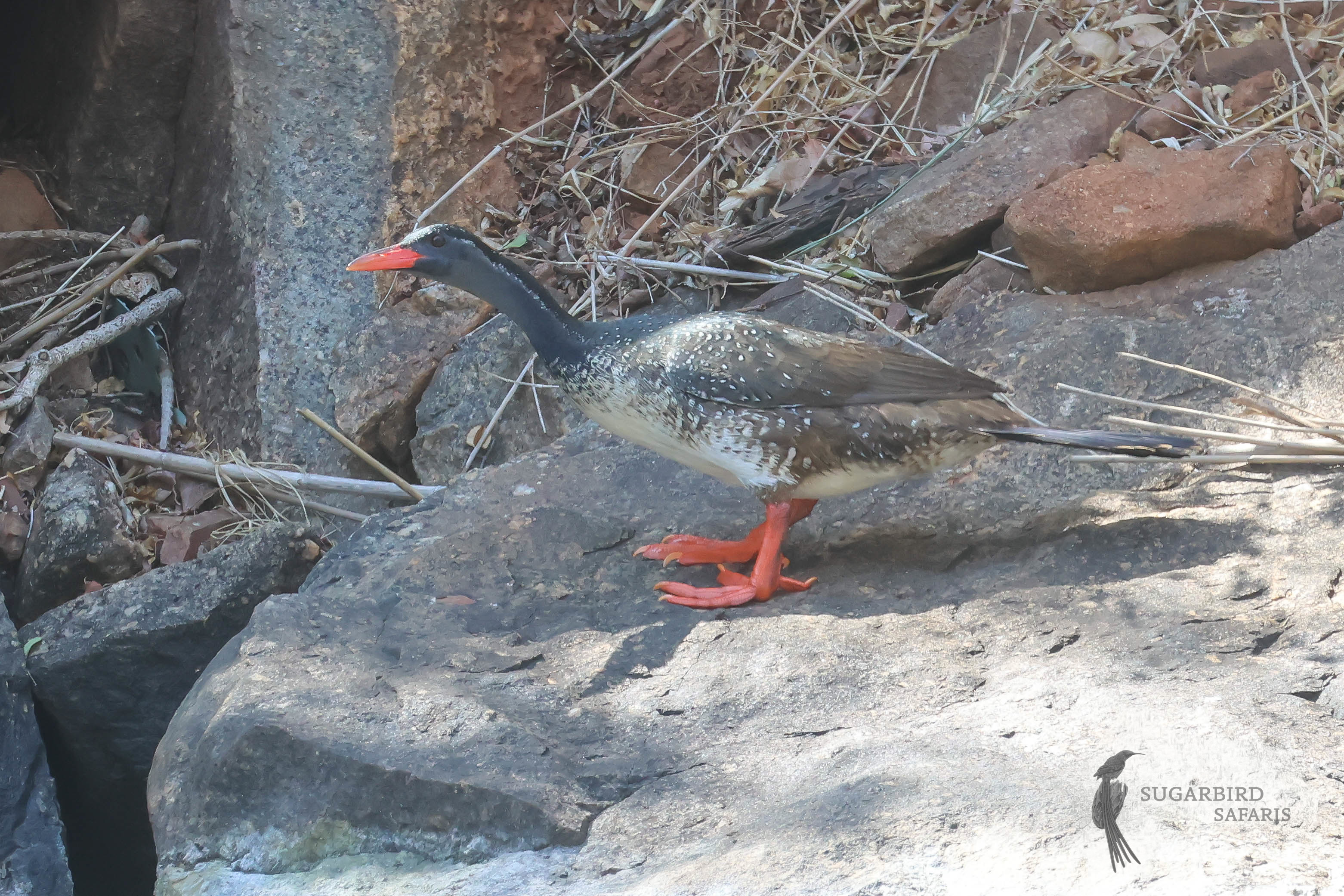
As we near Wakkerstroom, we’ll stop at a local wetland reserve, where we’ll set up our scopes to scan for a wide range of waterbirds. Possible sightings include African Swamphen, Black Crake, Swamp Warbler, Purple Heron, and with some luck the shy Red-chested Flufftail. Local otters have also been reported in this area.
Day 8 – Wakkerstroom
This morning we’re joined by a local birding expert to help us unlock the secrets of Wakkerstroom’s rich and specialized birdlife. We begin in the wet grasslands just outside the village, where we’ll once again target the elusive Red-chested Flufftail, as well as other early morning specialists like African Marsh Harrier gliding low over the reeds.
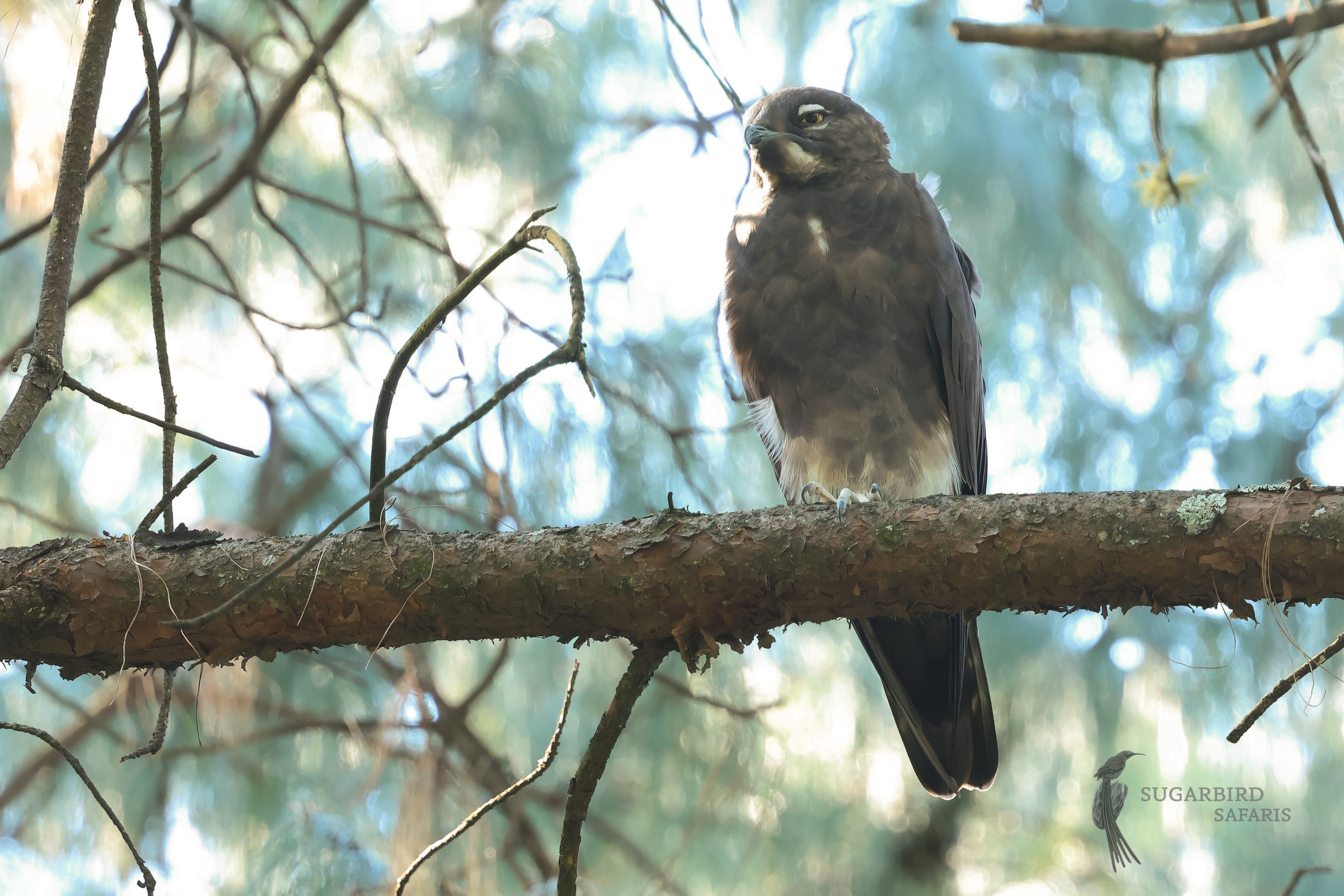
From there, we venture into the higher-altitude meadows, home to some of South Africa’s most sought-after endemic grassland birds. We’ll be scanning carefully for Yellow-breasted Pipit, Denham’s Bustard, Eastern Long-billed Lark, and the striking Jackal Buzzard.
Top on our wishlist are two of South Africa’s rarest birds: Rudd’s Lark and Botha’s Lark. Both species are critically endangered, with small and declining populations limited to very specific grassland patches. If conditions are favorable and the timing is right, we may have a chance to observe one or both of these remarkable endemics.
In the afternoon, we’ll explore more of the area’s open grasslands, visiting a known site for White-bellied Bustard. During the day, we’ll also be on the lookout for Southern Bald Ibis, which often forage in groups across the landscape or fly overhead in loose V-formations. This striking species breeds on cliffs and mountain escarpments in the region and is a firm favorite among local birders.
Day 9 – Wakkerstroom → Mkhuze Game Reserve
After a final morning of birding around Wakkerstroom, with one last chance to find any remaining target species, we travel east towards Mkhuze Game Reserve, one of South Africa's premier birding destinations. Home to more than 420 recorded bird species, the reserve is renowned for its exceptional habitat diversity, ranging from sandforest and acacia savanna to riverine woodland, wetlands, and pans.
For the next two nights, we'll stay in a comfortable rest camp inside the reserve, allowing us to experience the park from sunrise to sunset. Surrounded by pristine wilderness, the camp itself offers excellent birding, with many species regularly seen or heard right from the chalets.
The surrounding sandforest is home to some of South Africa's most sought-after bird species. Here, we'll search for specialties such as Eastern Nicator, Rudd's Apalis, Pink-throated Twinspot, and the remarkable African Broadbill, whose distinctive mechanical wing-clicking display often reveals its presence before the bird itself comes into view.
Day 10 – uMkhuze Game Reserve
Our focus, however, remains on the unique sandforest biome, which shelters some of the region’s most sought-after and localized species. We’ll carefully search for Neergaard’s Sunbird and the charming Red-fronted Tinkerbird.
uMkhuze also offers some of the best bird hides in South Africa, quietly tucked away beside waterholes and pans. A highlight is Nsumo Pan, home to one of the country’s few breeding colonies of Pink-backed Pelican. The pan often teems with other waterbirds too, including herons, ducks, storks, and African Jacanas.
The network of safe walking trails around the hides lets us explore the area at a gentle pace, providing excellent chances to encounter birds like Black Cuckooshrike, Common Scimitarbill, and, again, the gorgeous Pink-throated Twinspot.
With its mix of forest, savanna, wetlands, and open water, uMkhuze offers one of the richest and most diverse birding days of the entire trip.
Day 11 – Hluhluwe → St. Lucia
Before breakfast, we’ll enjoy one last gentle walk through camp, taking in the soft calls and rustling shadows of the sandforest, a final chance to spot any remaining specialties from this unique habitat.
We then continue our journey toward the coastal town of St. Lucia, nestled between the warm Indian Ocean and the wild heart of iSimangaliso Wetland Park. Famous for its laid-back charm and natural oddities, like hippos strolling through the streets after dark, St. Lucia makes a memorable base for our next two nights.
In the afternoon, we’ll explore the forest south of the village on foot, accompanied by a local guide who knows where the rare birds hide. In this lush coastal forest, we’ll search for Rudd’s Apalis, Woodward’s Batis, the skulking Buff-spotted Flufftail, and the dazzling Livingstone’s Turaco. Other species to watch for include Terrestrial Brownbul, Grey Sunbird, and the striking Purple-banded Sunbird.
After dinner at one of the village’s charming restaurants, hopefully with a hippo lumbering by in the distance, we’ll visit a nearby site where African Wood Owl is often heard or seen.
Day 12 – iSimangaliso Wetland Park: Eastern Shores
Today we dedicate the day to exploring the Eastern Shores section of iSimangaliso Wetland Park, one of South Africa’s most ecologically diverse protected areas. With its mix of rainforest, grasslands, coastal lakes, and soaring dune systems, the park is a UNESCO World Heritage Site and a treasure trove for birders and wildlife lovers alike.
We’ll begin in the coastal forests, where we’ll search for shy and colorful species like Gorgeous Bushshrike, Woodward’s Batis, Eastern Nicator, and Livingstone’s Turaco. We’ll also scan the treetops at forest edges for the rarely seen Southern Banded Snake Eagle and the graceful African Cuckoo Hawk.
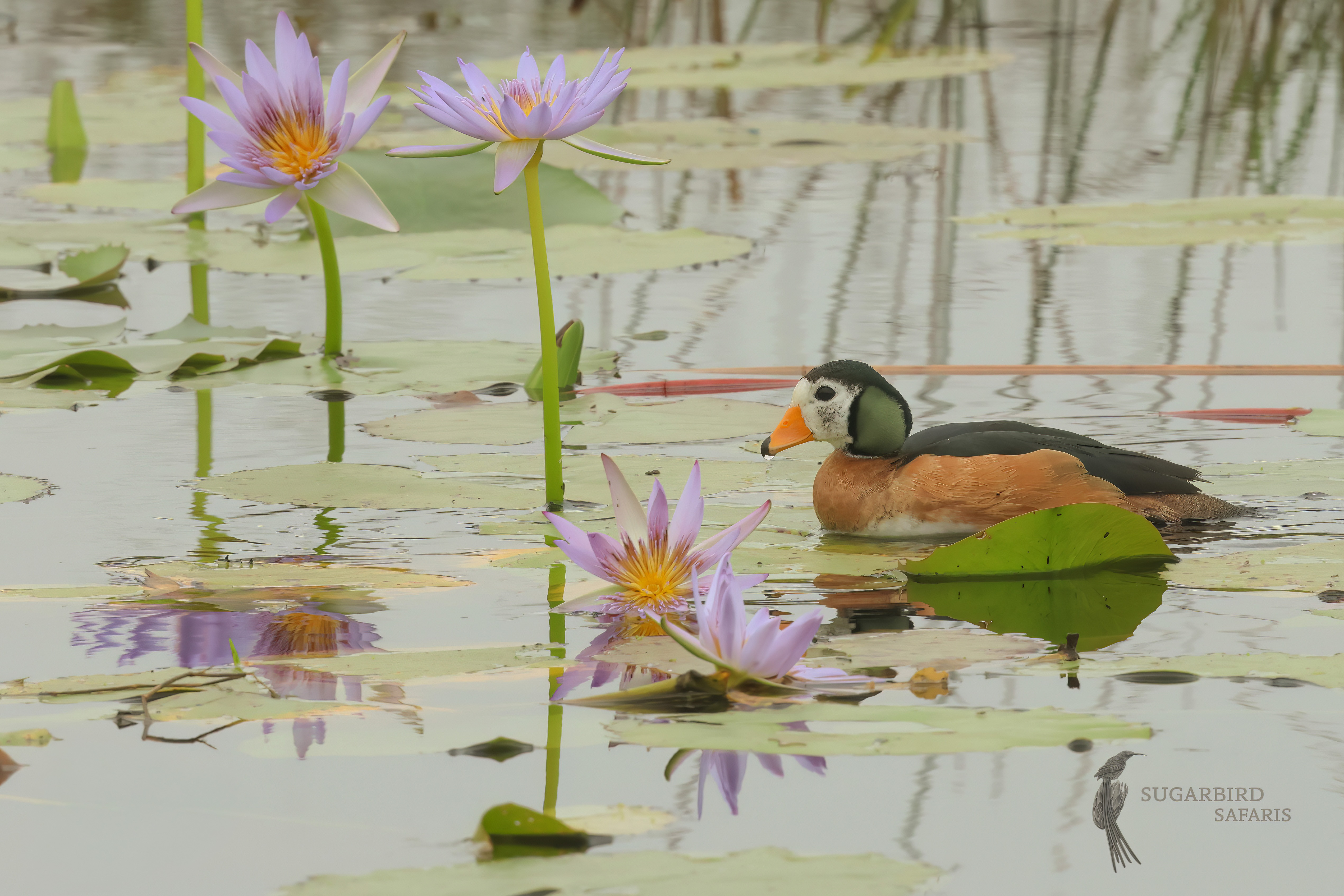
As we move into the open grasslands, our focus shifts to species such as Senegal Lapwing, Rosy-throated Longclaw, Lemon-breasted Canary, and the vocal Croaking Cisticola. The nearby coastal pans and lakes provide a haven for a variety of waterbirds. Here we may find African Pygmy Goose, White-backed Duck, Lesser Moorhen, and, with luck, the Rufous-bellied Heron skulking among the reeds.
Day 13 – St. Lucia → Eshowe
We begin the morning at the St. Lucia estuary mouth, where the freshwater lagoon merges with the Indian Ocean, a dramatic meeting of ecosystems. Though the waters here are home to hippos, Nile crocodiles, and even Bull Sharks, several tern species patrol the waves: Swift, Lesser Crested, Common, Little, and the massive Caspian Tern are all possibilities. Closer to the reedbeds, we’ll search for the striking Southern Brown-throated Weaver and Eastern Golden Weaver.
In the afternoon, we drive inland toward the lush town of Eshowe, where we’ll visit the Dlinza Forest Nature Reserve. This misty scarp forest is home to a host of elusive species. A permanent hide at the forest edge often delivers views of Green Twinspot, Lemon Dove, and Tambourine Dove as they come in to drink or forage. Inside the forest, we’ll walk among towering trees in search of targets like Spotted Ground Thrush, Chorister Robin-Chat and Eastern Bronze-naped Pigeon.
Keep an eye on the forest floor, too, Blue Duiker, a tiny, shy forest antelope, is often seen here, rustling softly through the undergrowth.
Day 14 – Eshowe and Surroundings
We start the day early with a focused walk through Dlinza Forest, joined by a local expert guide. Our primary target is the elusive Spotted Ground Thrush, a secretive forest dweller and one of the region’s most sought-after birds. As we move through the tangled undergrowth, we’ll also be watching and listening for Green Malkoha, Dark-backed Weaver, and the radiant African Emerald Cuckoo, whose liquid call often echoes through the treetops.
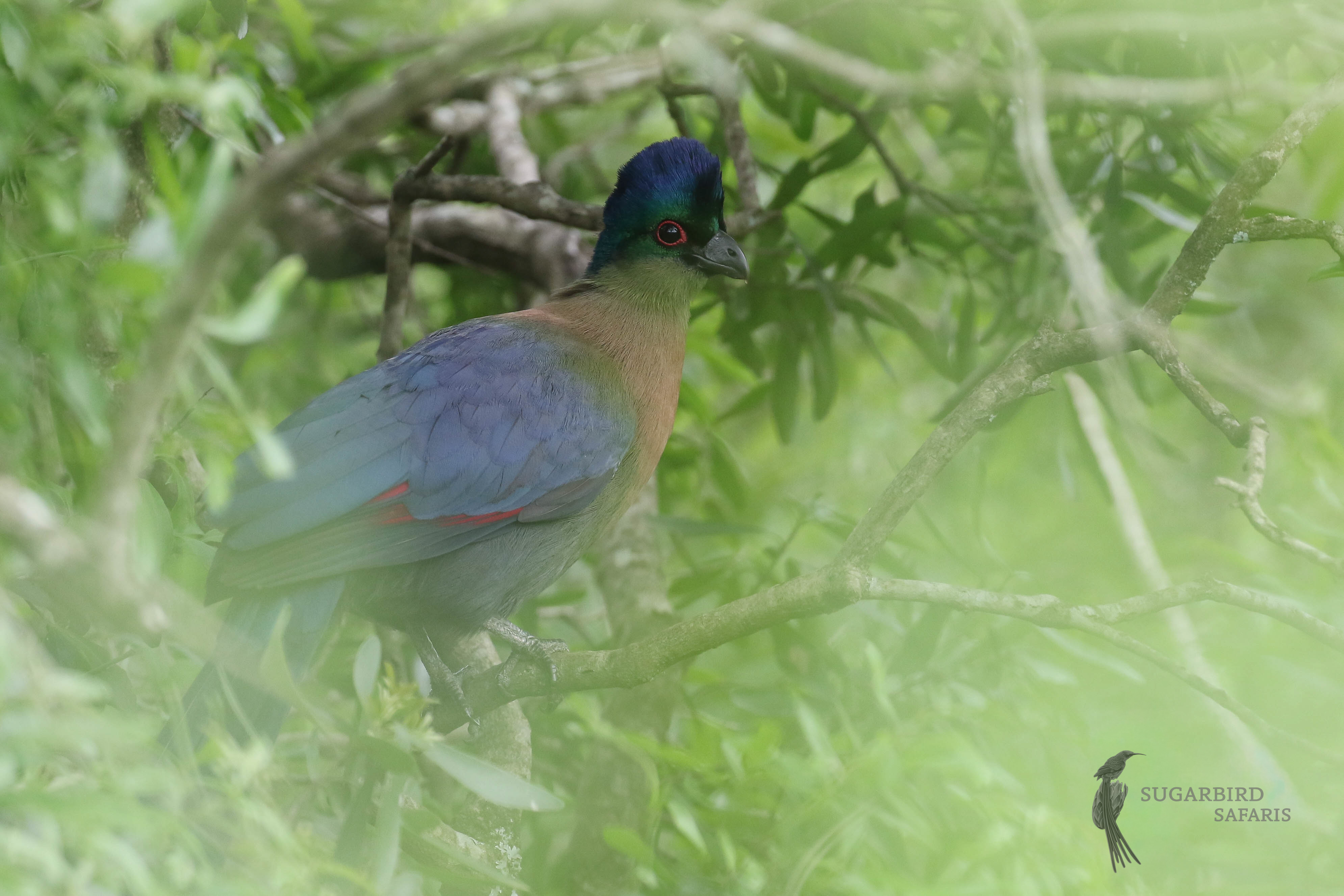
One of Dlinza’s special features is its boardwalk and canopy tower, giving us an eye-level view of the forest canopy, a rare vantage point in African forests. From here, we might spot Purple-crested Turaco, White-eared Barbet, Black-bellied Starling and Crowned Hornbill as they move through the upper levels. The bare treetops near the tower are also a favored perch for the Eastern Bronze-naped Pigeon, so we’ll keep our scopes ready.
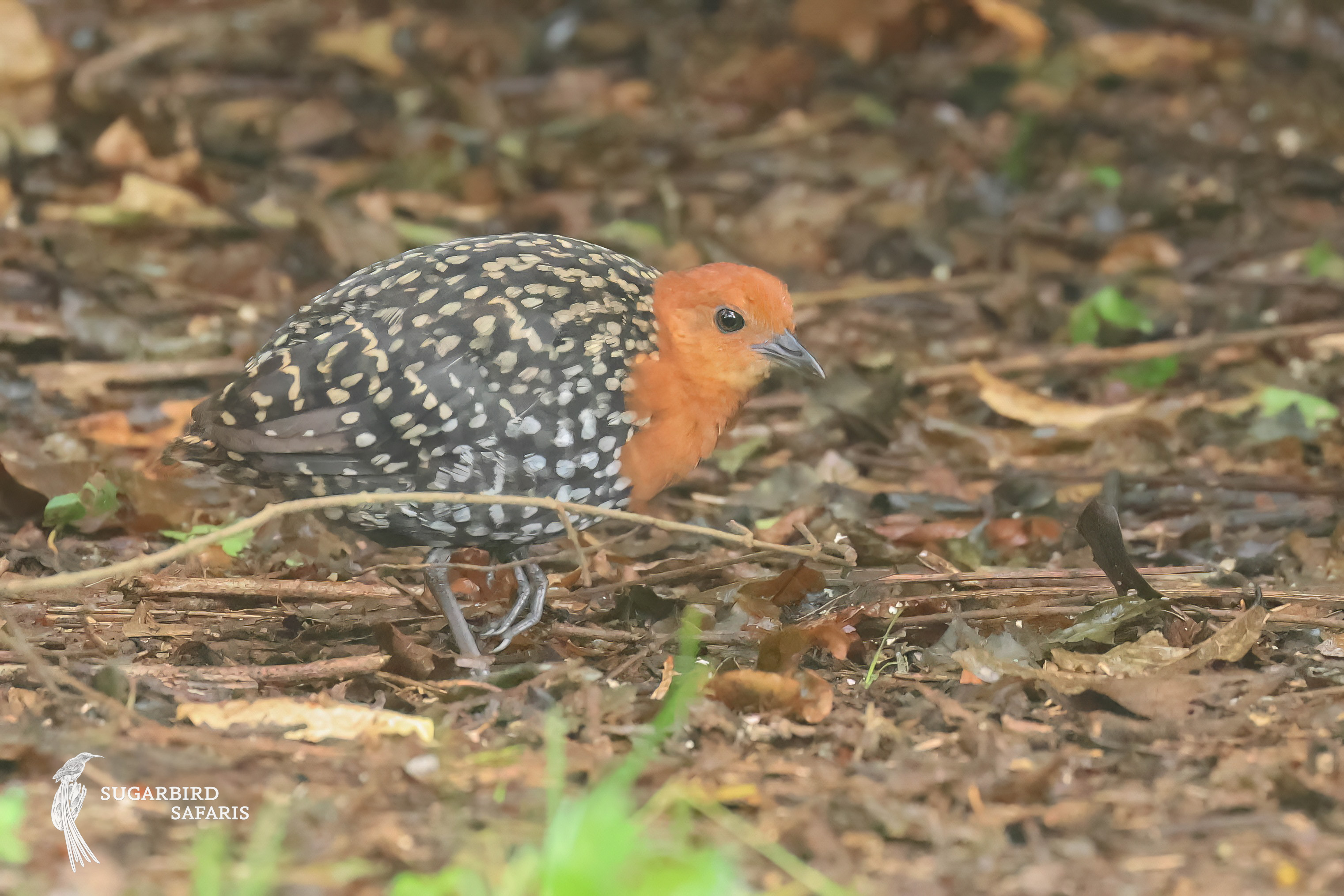
In the late morning, we head north to the remote Ongoye Forest, South Africa’s only known site for the Green Barbet, a localized species with a haunting, frog-like call. This rich patch of indigenous forest also gives us another chance to see Dlinza specialties, while we’ll also keep a lookout for Black-rumped Buttonquail in the surrounding grasslands.
As the day winds down, we continue to the coastal town of Mtunzini, known as South Africa’s premier site for Palm-nut Vulture. These graceful raptors breed in the nearby raffia palms and are often seen soaring overhead or perched in palm crowns.
Day 15 – Eshowe → Underberg
After breakfast, we leave behind the coastal forests and drive inland to our final base of the journey: Underberg, nestled in the foothills of the towering Drakensberg Mountains.
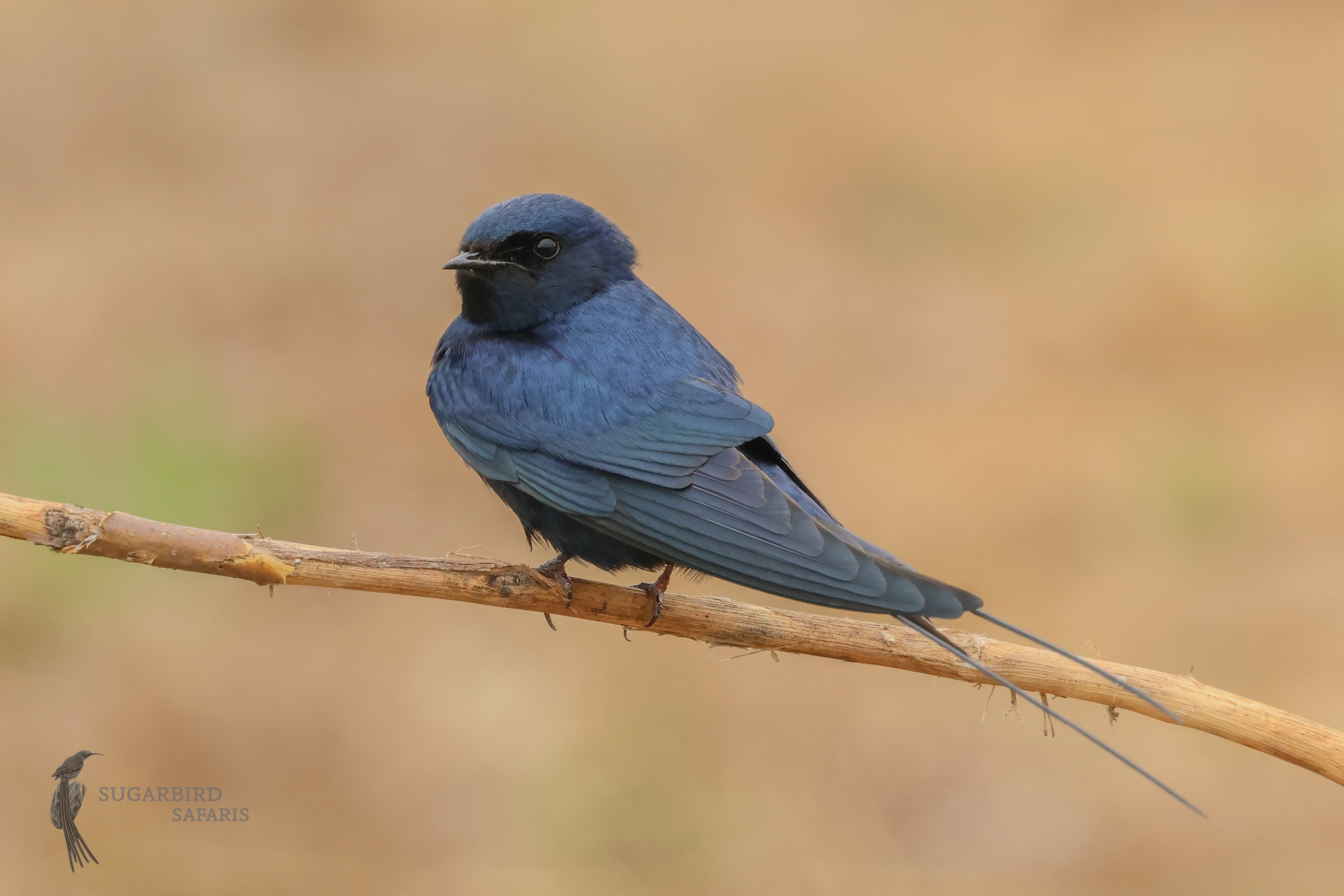
Along the way, we’ll make an important stop at one of the few remaining breeding sites of the endangered Blue Swallow. With fewer than 30 breeding pairs left in South Africa, this is a rare and precious opportunity to observe one of the country’s most threatened bird species. During our short walk in the area, we’ll also keep a lookout for Cape Grassbird, Fan-tailed Grassbird and the bold and charismatic Olive Bushshrike.
Upon arrival in Underberg, we’ll settle into our comfortable lodge. If time allows, we’ll take a relaxed walk in the surrounding fields and farmlands, an ideal introduction to the montane habitats and species we’ll explore in depth tomorrow during the grand finale of our birding adventure.
Day 16 – Sani Pass
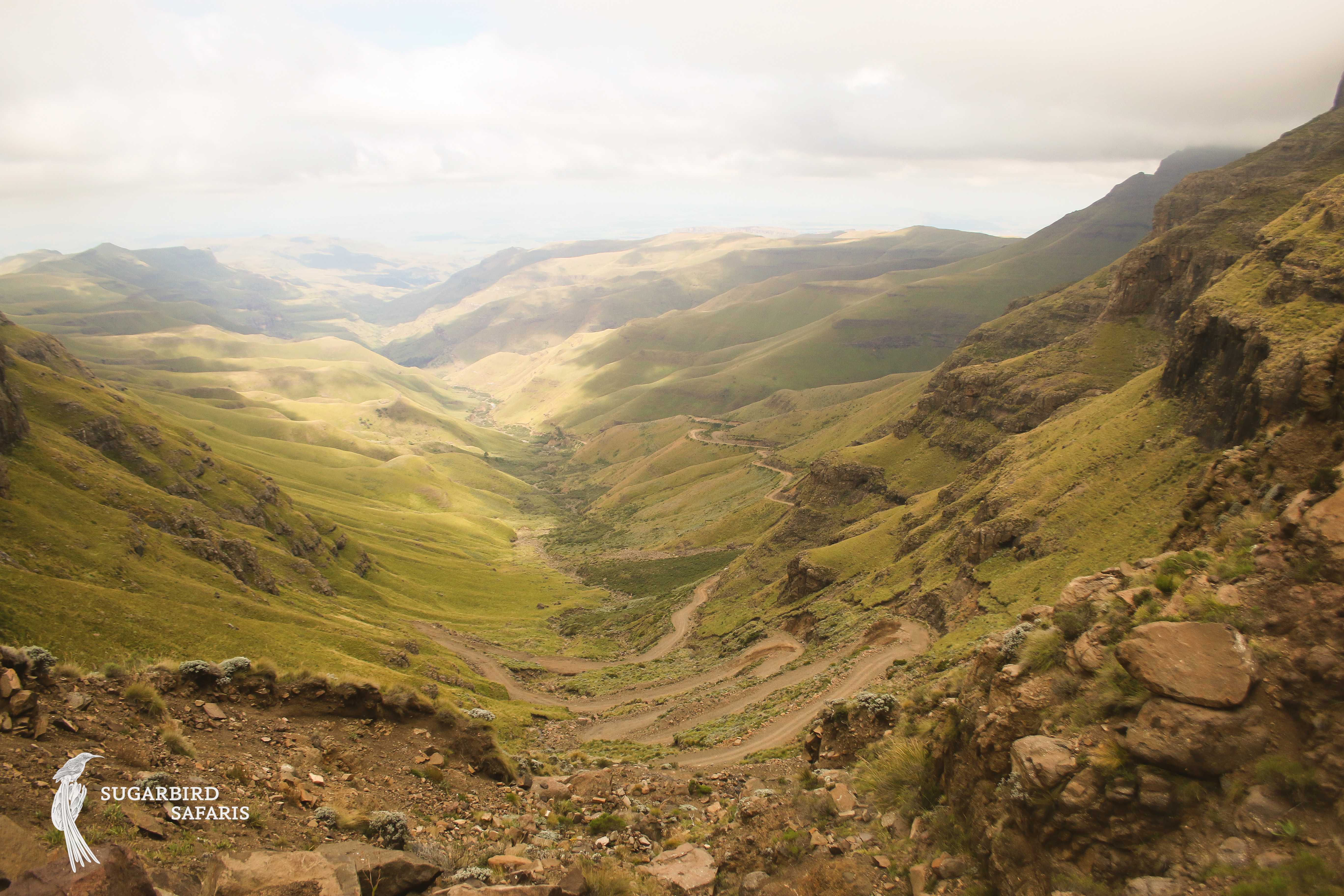
We end our journey in spectacular fashion with a full-day excursion to the summit of the legendary Sani Pass, one of the most dramatic mountain routes in southern Africa. This rugged 4x4-only track ascends to an elevation of 2,874 meters, crossing the border into Lesotho, and offering an unforgettable blend of highland scenery and high-altitude birding. A local specialist guide will accompany us throughout the day, ensuring safe passage and expert insight.
Even before we officially begin the pass, we'll stop in promising areas where we may encounter Bush Blackcap, Red-necked Spurfowl, Cape Grassbird, Red-throated Wryneck, and the secretive Buff-spotted Flufftail.
As we ascend the escarpment, the landscape transforms and we begin to see the first stands of Protea shrubs, magnet plants for nectar-loving birds. Among them, we hope to find the vibrant Malachite Sunbird and one of our top targets of the trip: Gurney’s Sugarbird, a long-tailed, slender endemic that belongs to a family found nowhere else but southern Africa.
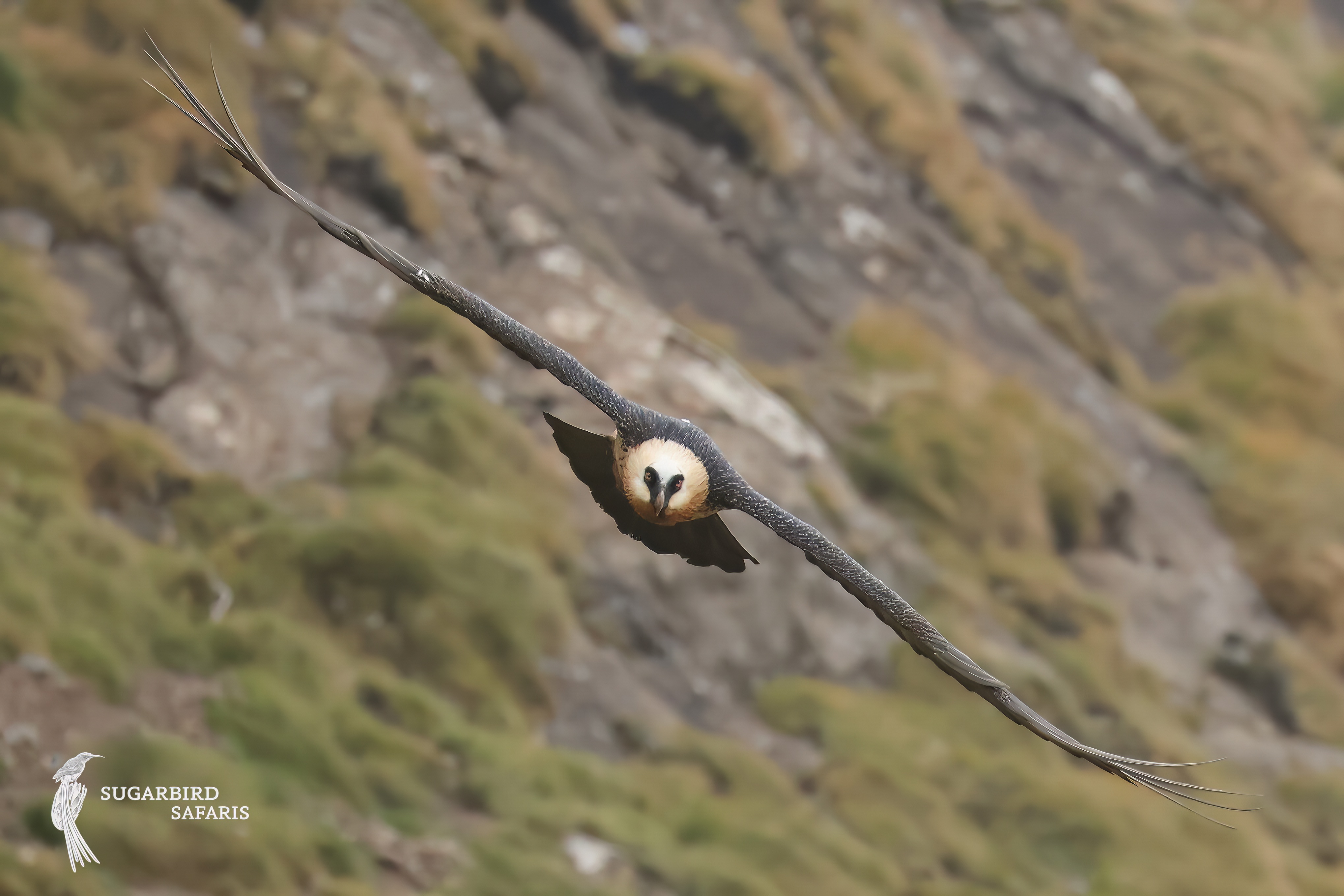
Higher still, the scenery becomes starker and more dramatic. We reach the domain of the Rockjumpers, a family, like the Sugarbird with just two species worldwide. Here we’ll look for the Drakensberg Rockjumper, a highland specialist and true emblem of these mountains. Don’t forget your passport, as we’ll now be entering Lesotho.
On the Lesotho plateau, the birdlife shifts again. We’ll scan rocky slopes and grasslands for species like Drakensberg Siskin, Sentinel Rock Thrush, Ground Woodpecker, Grey-winged Francolin, and both Mountain Pipit and African Rock Pipit.
On our return to the lowlands, we make one final targeted stop in search of the stately and endangered Wattled Crane, which breeds in the surrounding wetlands.
Day 17 – Underberg → OR Tambo International Airport
Depending on the flight schedules, we’ll tailor the day’s activities accordingly. If time allows, we can enjoy a final morning of birding around Underberg, perhaps revisiting favorite locations or targeting any missed species.
Alternatively, we may opt for a last stop at a nature reserve closer to Johannesburg, allowing us to enjoy some final sightings while staying within easy reach of OR Tambo International Airport—a prudent way to avoid unexpected delays.
After two unforgettable weeks filled with landscapes, lifers, and once-in-a-lifetime sightings, we wrap up our bird-rich adventure through South Africa. With hearts full and checklists brimming, we head home with memories of soaring vultures, elusive flufftails, and the call of the wild still echoing in our minds.
Tailor-Made to Your Wishes
This itinerary serves as an example of what is possible with Sugarbird Safaris. Every journey can be fully tailored to your interests, travel style and available time. Destinations, activities and accommodations can all be adjusted to create your ideal safari experience.
Please note that the itinerary is a guideline and may occasionally need to be adjusted due to unforeseen circumstances, such as weather conditions, road closures, wildlife movements or other circumstances beyond our control. We always aim to make the best possible use of the available time while keeping the experience enjoyable and safe.
Whether you would like to spend extra time at a favourite destination, include additional activities or extend your adventure by a few days, we'll be happy to design a safari that perfectly matches your wishes.